When a customer clicks “Complete Purchase” on an e-commerce store or places a wholesale replenishment order, a behind-the-scenes clock immediately starts ticking. Today’s buyers expect fast dispatch, undamaged packaging, and the exact items they ordered, every single time. Behind nearly every reliable online brand and retail distributor is an efficient pick and pack fulfillment operation.
For growing businesses, understanding how pick and pack logistics work is essential to scaling smoothly without sacrificing profit margins or customer satisfaction. Whether you are outgrowing your current storage space or evaluating Third-Party Logistics (3PL) partners in Canada, this complete guide explains the pick and pack fulfillment process, common picking strategies, pricing structures, and business benefits.
What Is Pick and Pack Fulfillment?
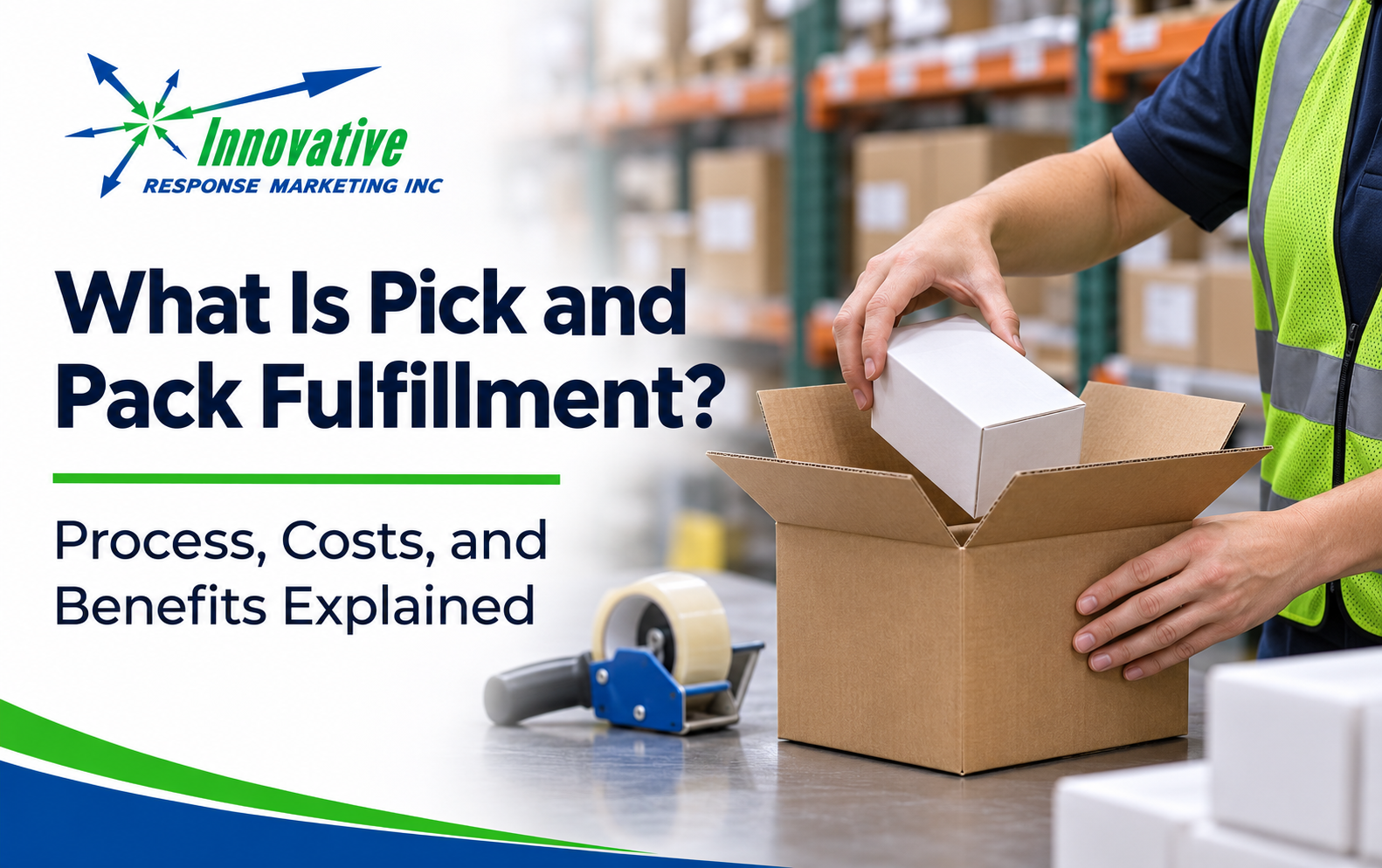
Pick and pack fulfillment is a core warehousing and order processing workflow in which individual products are retrieved (“picked”) from warehouse inventory shelves, placed into appropriate shipping cartons or mailers with protective dunnage (“packed”), labeled, and handed off to shipping carriers for delivery to the end customer.
Unlike traditional bulk freight distribution where full pallets of identical goods move from manufacturers to big-box retail distribution centers, pick and pack fulfillment is built for item-level accuracy and speed. It powers direct-to-consumer (B2C) e-commerce storefronts, subscription box brands, promotional marketing kits, and retail Point of Sale (POS) replenishment programs.
The 5-Step Pick and Pack Fulfillment Process
Modern pick and pack warehouses rely on tight coordination between trained logistics staff and a cloud-based Warehouse Management System (WMS). Here is how a single order moves from digital checkout to physical dispatch:
1. Inventory Receiving and Slotting
Before a single order can be fulfilled, inbound inventory arrives at the warehouse loading dock. Staff inspect shipments against advance shipping notices, scan SKU barcodes, and assign products to specific storage locations (such as pallet racks, flow racks, or small-item bins). Fast-moving SKUs are strategically “slotted” closest to packing stations to minimize walking time.
2. Automated Order Syncing
When a customer completes an order on your shopping cart (such as Shopify, WooCommerce, or BigCommerce), an online marketplace (like Amazon), or an Electronic Data Interchange (EDI) network, the order data transmits automatically to the warehouse’s WMS in real time.
3. Order Picking
The WMS generates an optimized pick list or sends digital instructions to a warehouse associate’s handheld barcode scanner. The picker navigates the warehouse floor along the shortest calculated route, scans each bin location and product barcode to verify SKU accuracy, and places the items into a picking tote.
4. Packing, Kitting, and Quality Verification
Once picked, items arrive at a packing station. Packers perform a secondary barcode scan and weight check before selecting the optimal box or mailer size. Depending on brand requirements, this stage also includes:
- Adding protective void fill (kraft paper, air pillows, or bubble wrap).
- Executing custom kitting (bundling multiple SKUs into a single promotional kit or gift set).
- Inserting branded thank-you cards, bounce-back coupons, or personalized variable-print collateral.
5. Labeling, Carrier Handoff, and Live Tracking
The WMS rates the parcel across integrated carriers (such as Canada Post, UPS, FedEx, or regional couriers), prints the shipping label, and pushes the tracking number back to your online store. Your customer automatically receives a shipping confirmation email or SMS while the parcel is staged for daily carrier pickup.
4 Common Warehouse Picking Methods Explained
Not every warehouse picks orders the same way. Depending on daily order volume and SKU variety, fulfillment providers use four primary picking methodologies:
- Piece Picking (Single-Order Picking): A picker walks the warehouse floor to collect all items for one customer order at a time before moving to the next. This works well for low-volume operations or specialized, high-value orders.
- Batch Picking: A picker collects identical SKUs across multiple orders simultaneously in a single pass through the warehouse, then brings the batch to a sorting station. This drastically reduces travel time when dozens of customers order the same popular product.
- Zone Picking: The warehouse is divided into dedicated zones (for example, apparel in Zone A, accessories in Zone B). Pickers remain assigned to their specific zone and pass order totes along a conveyor or staging area until all zones are complete.
- Wave Picking: A hybrid strategy that groups orders into scheduled “waves” based on carrier pickup cutoff times, shipping priority (such as expedited overnight parcels), or warehouse zone efficiency.
| Picking Method | Best Order Volume | Ideal SKU Profile | Primary Operational Advantage |
|---|---|---|---|
| Piece Picking | Low to moderate daily orders | High SKU variety, bespoke or fragile goods | Simple workflow with minimal sorting steps |
| Batch Picking | Moderate to high daily orders | High concentration of best-selling SKUs | Cuts warehouse walking time significantly |
| Zone Picking | High daily order volume | Large multi-category catalogs | Prevents aisle congestion and builds specialist speed |
| Wave Picking | High volume with strict cutoffs | Multi-carrier and expedited shipping mixes | Aligns fulfillment speed with carrier dispatch schedules |
How Pick and Pack Fulfillment Costs Work
When outsourcing pick and pack operations to a 3PL provider, pricing is typically structured around transparent, usage-based components rather than rigid fixed overhead:
- Receiving Fees: Charged per pallet, carton, or hourly labor rate when inbound stock arrives at the warehouse and is logged into the WMS.
- Storage Fees: Billed monthly based on the exact physical footprint your inventory occupies measured per pallet position, shelf bin, or cubic foot.
- Pick Fees: Typically structured as a base fee for the first item picked in an order, plus a smaller incremental fee for each additional item in the same package.
- Packing and Dunnage Fees: Covers the cost of standard corrugated boxes, padded mailers, tape, void fill, and packing labor. Custom branded packaging can also be stored and used on request.
- Shipping and Postage Rates: Calculated based on parcel weight, dimensions (dimensional weight), and destination postal code leveraging the 3PL’s bulk carrier discounts.
Because costs scale directly with inventory and order volume, businesses avoid paying for empty warehouse space or idle staff during quieter sales months.
5 Key Benefits of Professional Pick and Pack Fulfillment
1. Faster Delivery Speeds and Same-Day Dispatch
Streamlined pick paths and dedicated packing stations allow professional fulfillment centers to process orders within hours of checkout, helping brands meet consumer expectations for next-day and two-day delivery.
2. Up to 99.9% Order Accuracy
Barcode-driven picking and multi-stage scan verification eliminate manual guesswork. Fewer mis-picks mean fewer costly return labels, replacement shipments, and negative customer reviews.
3. Lower Shipping and Packaging Expenses
High-volume fulfillment centers negotiate deeply discounted tier-one rates with national couriers and postal networks while purchasing packaging supplies at wholesale bulk prices—savings passed directly to your bottom line.
4. Effortless Seasonal Scalability
Flash sales, product launches, and fourth-quarter holiday surges can overwhelm internal teams. An established fulfillment partner absorbs sudden volume spikes seamlessly without operational bottlenecks.
5. Omnichannel Flexibility Beyond E-Commerce
A versatile fulfillment partner does not stop at standard online orders. The same infrastructure can manage B2B wholesale distribution, retail Point of Sale (POS) displays, trade show materials, and promotional fulfillment under a unified inventory pool.
The Strategic Advantage of Fulfilling from Mississauga and the GTA
For businesses shipping across Canada and North America, warehouse geography plays a major role in transit speed and postage costs. Operating out of Mississauga and the Greater Toronto Area (GTA) places inventory at the center of Canada’s primary logistics corridor offering immediate access to major highways (Highways 401, 403, and 407), Toronto Pearson International Airport, and major Canada Post processing hubs. Faster regional ground transit reduces shipping zones and delivers orders to millions of Canadian households quickly and economically.
Streamline Your Pick and Pack Operations with Innovative Response Marketing
Whether you are scaling a fast-growing e-commerce storefront, coordinating retail POS rollouts, or assembling custom promotional kits, having the right operational partner ensures every order reinforces your brand’s reputation.
At Innovative Response Marketing Inc., based in Mississauga, Ontario, we bring more than 20 years of industry expertise to modern warehousing, distribution, and fulfillment. Our advanced Warehouse Management System links seamlessly with leading shopping carts, marketplaces, and EDI platforms, giving you customized 24/7 portal access to monitor inventory levels, order status, and fulfillment progress in real time.
Even better, because we combine 3PL, e-commerce, and POS fulfillment with in-house variable and offset printing and certified Canada Post Smartmail Expert Partner services, we can seamlessly integrate custom printed inserts, kitting, and targeted direct mail campaigns directly into your fulfillment workflow.
Ready to simplify your order fulfillment and scale with confidence? Contact Innovative Response Marketing Inc. today to request a quote and discover how our tailored pick and pack solutions can support your growth.